
Glove Safety Standards Explained | EN388, EN374, EN407 & Cut Ratings

When selecting safety gloves, it’s important to understand the international testing standards used to measure glove performance. These standards help determine how well gloves protect against hazards such as cuts, chemicals, heat, punctures, and abrasion.
Some of the most commonly referenced glove standards include:
- EN388 – Mechanical protection (cuts, abrasion, tear, puncture)
- EN374 – Chemical resistance and protection from micro-organisms
- EN407 – Heat and thermal protection
In Australia and New Zealand, glove standards fall under AS/NZS 2161, which largely aligns with the European EN standards used globally.
Understanding these ratings helps ensure you choose the right glove for the right application, whether you are working in manufacturing, laboratories, engineering, or chemical handling.
Quick Summary of Glove Safety Standards
The table below provides a quick overview of the most common glove safety standards used internationally.

What Is a cut-rated or Cut-Resistant Glove?
A cut-resistant glove is a glove that has been tested and rated to determine how well it protects against cuts and mechanical hazards.
Cut-resistant gloves are commonly used in industries where workers handle:
- sheet metal
- glass
- sharp tools
- machinery
- construction materials
A glove is considered cut-rated when it meets at least one of the major testing standards:
- EN388 (European Standard) – widely used worldwide
- ANSI/ISEA 105 (American Standard) – used primarily in the United States
These standards measure how resistant the glove material is to hazards such as cutting, abrasion, puncture, and tearing.
What Does the EN388 Glove Rating Mean?
The EN388 standard measures how well gloves protect against common mechanical risks.
Gloves tested under EN388 are rated for four different hazards:
- Abrasion resistance
- Cut resistance
- Tear resistance
- Puncture resistance
The higher the number, the greater the glove’s resistance to that specific hazard.
Abrasion Resistance
Abrasion resistance measures how many cycles of rubbing against a rough surface the glove material can withstand before it fails.
Gloves with higher abrasion ratings last longer when handling rough materials such as metal, timber, or construction materials.
Cut Resistance
Cut resistance measures how well the glove resists slicing or cutting from sharp edges.
Gloves with higher cut ratings are typically used for:
- sheet metal handling
- glass work
- industrial manufacturing
- construction work
For example:
- Lower cut ratings may be suitable for general mechanical tasks
- Higher cut ratings are often required when handling glass or sharp metal
Tear Resistance
Tear resistance measures how much force is required to tear the glove material.
Higher tear resistance is important in environments where gloves may catch on sharp edges or rough materials.
Puncture Resistance
Puncture resistance measures how much force is required for a sharp point to pierce the glove material.
This is especially important when working with:
- nails
- wires
- sharp tools
- industrial components
What Does the EN374 Chemical Glove Standard Mean?
The EN374 standard measures how well gloves protect against hazardous chemicals.
Gloves that meet this standard are marked with this chemical protection pictogram, which identifies which chemicals the glove has been tested against.

The letters shown beneath the symbol correspond to specific chemicals that the glove can protect against.
EN374 Chemical Test Letters
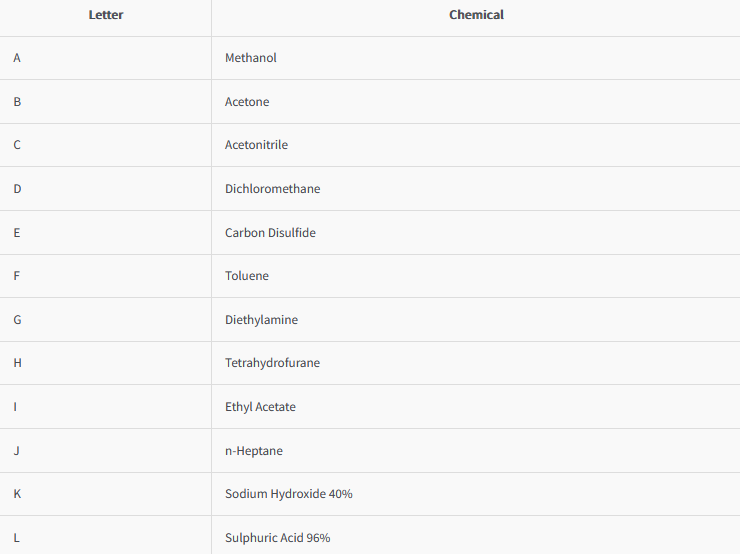
If a glove shows the corresponding letter under the EN374 pictogram, it means the glove has passed testing for protection against that chemical.
To receive this rating, the glove must resist chemical permeation for at least 30 minutes.
What Is Chemical Permeation?
Permeation is the process where a chemical passes through a glove material at the molecular level.
Even if a glove appears intact, certain chemicals can still penetrate the material over time.
Because of this, it’s important to always choose gloves that are specifically tested for the chemicals you are handling.
Some commonly used chemicals are not included in the EN374 test list, such as:
- Unleaded petrol
- Methyl Ethyl Ketone (MEK)
- Xylene
- Skydrol
If you work with these substances, you should request a chemical compatibility data sheet from the glove manufacturer.
When Should EN374 Rated Gloves Be Used?
You should always use EN374 rated gloves when:
- handling hazardous chemicals
- frequently exposing gloves to chemicals
- submerging gloves in chemical solutions
The glove packaging should clearly display the EN374 chemical protection pictogram and relevant chemical letters.
EN374-2 Micro-Organism Protection
Some gloves are also tested for protection against micro-organisms, including bacteria and fungi.
This protection level is shown using the micro-organism pictogram.

To meet this standard, gloves must pass penetration testing, which evaluates whether microorganisms can pass through:
- porous glove materials
- seams
- microscopic holes
- manufacturing defects
Penetration is different from permeation. While permeation occurs at the molecular level, penetration refers to physical leaks through defects in the glove material.
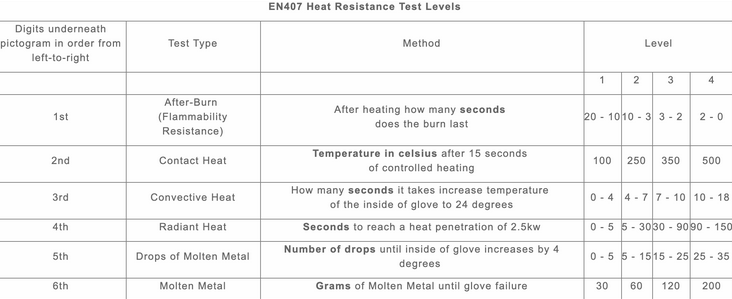
EN407 Heat Protection Standard
The EN407 standard measures how well gloves protect against thermal hazards.

This standard evaluates several types of heat exposure:
- Flammability
- Contact heat
- Convective heat
- Radiant heat
Some gloves are also tested for resistance to small splashes of molten metal, which is especially important for welding applications.
Gloves used in high-temperature environments such as metal work, welding, or foundries often carry the EN407 rating.
Why Independent Glove Testing Matters
Safety gloves should always be independently tested and certified to recognised international standards. Independent testing ensures that gloves provide the level of protection claimed by the manufacturer.
Using gloves that meet recognised standards helps ensure workers are protected from hazards such as:
- cuts and abrasions
- chemicals
- punctures
- heat exposure
Choosing the correct glove for the application is essential for both workplace safety and regulatory compliance.
Frequently Asked Questions About Glove Safety Standards
What does EN388 mean on gloves?
EN388 is a European safety standard that tests gloves for resistance to mechanical hazards including abrasion, cut resistance, tear resistance, and puncture resistance.
What is the highest cut resistance level for gloves?
Cut resistance levels vary depending on the testing method used. Higher cut ratings indicate greater resistance to sharp objects and are commonly used when handling materials such as metal or glass.
What does EN374 mean on gloves?
EN374 indicates that a glove has been tested for protection against hazardous chemicals and micro-organisms. The glove must pass chemical permeation testing to receive this certification.
Are cut-resistant gloves cut-proof?
No glove is completely cut-proof. Cut-resistant gloves are designed to reduce the risk of injury when handling sharp objects, but they cannot guarantee complete protection.
When should chemical-resistant gloves be used?
Chemical-resistant gloves should be used when handling hazardous chemicals, working with solvents, or when gloves may be exposed to chemical splashes or immersion.
Need Help Choosing the Right Gloves?
If you are unsure which glove is suitable for your application, we recommend reaching out to us first. Our team can help ensure you are using the right gloves for your specific chemicals, tasks, and workplace hazards.
Posted: Sunday 2 August 2026